Listes Dali Crucifixion Hypercube
Listes Dali Crucifixion Hypercube. For those in need of a reminder, the dali in question (76 ½ x 48 ¾"), which depicts christ on the polyhedron net of a tesseract, is his attempt at quantum mysticism, a term he coined that fuses mathematics, science, and religion to create a unique interpretation of christ's crucifixion. A hypercube, inhabiting a 4d space, casts "shadows" of a variety of three dimensional shapes upon 3d space and it can be formed by properly.

Cool Discovering Sacred Christian Art Photos And Images Wcat Radio
Dali used an unfolded representation of a hypercube in his painting crucifixion. Nov 09, 2021 · dali used an unfolded representation of a hypercube in his painting crucifixion. The cube perspectivally closest to the viewer, for example, seems to both trap and frame christ's body; For those in need of a reminder, the dali in question (76 ½ x 48 ¾"), which depicts christ on the polyhedron net of a tesseract, is his attempt at quantum mysticism, a term he coined that fuses mathematics, science, and religion to create a unique interpretation of christ's crucifixion. Accordingly, dali seems to push the boundaries of the third dimension in crucifixion to comment on spirituality:4th,5th,6th dimensions and speed of light
Dali used an unfolded representation of a hypercube in his painting crucifixion. 4th,5th,6th dimensions and speed of light Accordingly, dali seems to push the boundaries of the third dimension in crucifixion to comment on spirituality: A hypercube, inhabiting a 4d space, casts "shadows" of a variety of three dimensional shapes upon 3d space and it can be formed by properly. Dali used an unfolded representation of a hypercube in his painting crucifixion. Nov 09, 2021 · dali used an unfolded representation of a hypercube in his painting crucifixion.

It supports him as he floats in front of the hypercube cross with a sense of dubious solidity, as its opacity is ambiguous. 76 1/2 x 48 3/4in. 4th,5th,6th dimensions and speed of light It supports him as he floats in front of the hypercube cross with a sense of dubious solidity, as its opacity is ambiguous. Levitating before a hypercube—a geometric, multidimensional form—christ's body is healthy, athletic, and bears no signs of torture; A hypercube, inhabiting a 4d space, casts "shadows" of a variety of three dimensional shapes upon 3d space and it can be formed by properly. Feb 21, 2021 · the study for crucifixion (corpus hypercubus) shows how he explored a depiction of the cross as a tesseract, a hypercube with eight cubical cells, … Accordingly, dali seems to push the boundaries of the third dimension in crucifixion to comment on spirituality: Dalí utilized his theory of nuclear mysticism, a fusion of catholicism, mathematics, and science, to create this unusual interpretation of christ's crucifixion. Levitating before this hypercube—that of a four... 76 1/2 x 48 3/4in.

Dalí utilized his theory of nuclear mysticism, a fusion of catholicism, mathematics, and science, to create this unusual interpretation of christ's crucifixion. Levitating before a hypercube—a geometric, multidimensional form—christ's body is healthy, athletic, and bears no signs of torture; Dali used an unfolded representation of a hypercube in his painting crucifixion. Feb 21, 2021 · the study for crucifixion (corpus hypercubus) shows how he explored a depiction of the cross as a tesseract, a hypercube with eight cubical cells, … For those in need of a reminder, the dali in question (76 ½ x 48 ¾"), which depicts christ on the polyhedron net of a tesseract, is his attempt at quantum mysticism, a term he coined that fuses mathematics, science, and religion to create a unique interpretation of christ's crucifixion. Dalí utilized his theory of nuclear mysticism, a fusion of catholicism, mathematics, and science, to create this unusual interpretation of christ's crucifixion. 4th,5th,6th dimensions and speed of light

Nov 09, 2021 · dali used an unfolded representation of a hypercube in his painting crucifixion. Feb 21, 2021 · the study for crucifixion (corpus hypercubus) shows how he explored a depiction of the cross as a tesseract, a hypercube with eight cubical cells, … 4th,5th,6th dimensions and speed of light The cube perspectivally closest to the viewer, for example, seems to both trap and frame christ's body; For those in need of a reminder, the dali in question (76 ½ x 48 ¾"), which depicts christ on the polyhedron net of a tesseract, is his attempt at quantum mysticism, a term he coined that fuses mathematics, science, and religion to create a unique interpretation of christ's crucifixion. Dali used an unfolded representation of a hypercube in his painting crucifixion. Dalí utilized his theory of nuclear mysticism, a fusion of catholicism, mathematics, and science, to create this unusual interpretation of christ's crucifixion. Nov 09, 2021 · dali used an unfolded representation of a hypercube in his painting crucifixion. 76 1/2 x 48 3/4in.. 4th,5th,6th dimensions and speed of light

Dalí utilized his theory of nuclear mysticism, a fusion of catholicism, mathematics, and science, to create this unusual interpretation of christ's crucifixion.. Nov 09, 2021 · dali used an unfolded representation of a hypercube in his painting crucifixion. 4th,5th,6th dimensions and speed of light Accordingly, dali seems to push the boundaries of the third dimension in crucifixion to comment on spirituality: Feb 21, 2021 · the study for crucifixion (corpus hypercubus) shows how he explored a depiction of the cross as a tesseract, a hypercube with eight cubical cells, … 76 1/2 x 48 3/4in.

Dalí utilized his theory of nuclear mysticism, a fusion of catholicism, mathematics, and science, to create this unusual interpretation of christ's crucifixion. A hypercube, inhabiting a 4d space, casts "shadows" of a variety of three dimensional shapes upon 3d space and it can be formed by properly. Nov 09, 2021 · dali used an unfolded representation of a hypercube in his painting crucifixion. 4th,5th,6th dimensions and speed of light It supports him as he floats in front of the hypercube cross with a sense of dubious solidity, as its opacity is ambiguous. Dali used an unfolded representation of a hypercube in his painting crucifixion. The idea of a hypercube as a means of conveying emotion appears to be a little stretched, but dali uses the hypercube as a metaphor that most viewers would be likely to miss. Dali used an unfolded representation of a hypercube in his painting crucifixion. The cube perspectivally closest to the viewer, for example, seems to both trap and frame christ's body;

Dalí utilized his theory of nuclear mysticism, a fusion of catholicism, mathematics, and science, to create this unusual interpretation of christ's crucifixion. Dalí utilized his theory of nuclear mysticism, a fusion of catholicism, mathematics, and science, to create this unusual interpretation of christ's crucifixion. It supports him as he floats in front of the hypercube cross with a sense of dubious solidity, as its opacity is ambiguous. Dali used an unfolded representation of a hypercube in his painting crucifixion. 76 1/2 x 48 3/4in. It supports him as he floats in front of the hypercube cross with a sense of dubious solidity, as its opacity is ambiguous.

76 1/2 x 48 3/4in. Dali used an unfolded representation of a hypercube in his painting crucifixion. The cube perspectivally closest to the viewer, for example, seems to both trap and frame christ's body; Dalí utilized his theory of nuclear mysticism, a fusion of catholicism, mathematics, and science, to create this unusual interpretation of christ's crucifixion.. A hypercube, inhabiting a 4d space, casts "shadows" of a variety of three dimensional shapes upon 3d space and it can be formed by properly.

The cube perspectivally closest to the viewer, for example, seems to both trap and frame christ's body;.. It supports him as he floats in front of the hypercube cross with a sense of dubious solidity, as its opacity is ambiguous. Dalí utilized his theory of nuclear mysticism, a fusion of catholicism, mathematics, and science, to create this unusual interpretation of christ's crucifixion. 76 1/2 x 48 3/4in. Nov 09, 2021 · dali used an unfolded representation of a hypercube in his painting crucifixion. The cube perspectivally closest to the viewer, for example, seems to both trap and frame christ's body; Dali used an unfolded representation of a hypercube in his painting crucifixion.

Dali used an unfolded representation of a hypercube in his painting crucifixion. 76 1/2 x 48 3/4in. For those in need of a reminder, the dali in question (76 ½ x 48 ¾"), which depicts christ on the polyhedron net of a tesseract, is his attempt at quantum mysticism, a term he coined that fuses mathematics, science, and religion to create a unique interpretation of christ's crucifixion. 4th,5th,6th dimensions and speed of light The cube perspectivally closest to the viewer, for example, seems to both trap and frame christ's body; Feb 21, 2021 · the study for crucifixion (corpus hypercubus) shows how he explored a depiction of the cross as a tesseract, a hypercube with eight cubical cells, … Levitating before a hypercube—a geometric, multidimensional form—christ's body is healthy, athletic, and bears no signs of torture; Nov 09, 2021 · dali used an unfolded representation of a hypercube in his painting crucifixion. Dalí utilized his theory of nuclear mysticism, a fusion of catholicism, mathematics, and science, to create this unusual interpretation of christ's crucifixion... Accordingly, dali seems to push the boundaries of the third dimension in crucifixion to comment on spirituality:

Dali used an unfolded representation of a hypercube in his painting crucifixion. Levitating before this hypercube—that of a four. For those in need of a reminder, the dali in question (76 ½ x 48 ¾"), which depicts christ on the polyhedron net of a tesseract, is his attempt at quantum mysticism, a term he coined that fuses mathematics, science, and religion to create a unique interpretation of christ's crucifixion. Dalí utilized his theory of nuclear mysticism, a fusion of catholicism, mathematics, and science, to create this unusual interpretation of christ's crucifixion. Nov 09, 2021 · dali used an unfolded representation of a hypercube in his painting crucifixion. Dali used an unfolded representation of a hypercube in his painting crucifixion... A hypercube, inhabiting a 4d space, casts "shadows" of a variety of three dimensional shapes upon 3d space and it can be formed by properly.

The cube perspectivally closest to the viewer, for example, seems to both trap and frame christ's body; Levitating before a hypercube—a geometric, multidimensional form—christ's body is healthy, athletic, and bears no signs of torture; 76 1/2 x 48 3/4in. Dali used an unfolded representation of a hypercube in his painting crucifixion. The idea of a hypercube as a means of conveying emotion appears to be a little stretched, but dali uses the hypercube as a metaphor that most viewers would be likely to miss.. Feb 21, 2021 · the study for crucifixion (corpus hypercubus) shows how he explored a depiction of the cross as a tesseract, a hypercube with eight cubical cells, …

Accordingly, dali seems to push the boundaries of the third dimension in crucifixion to comment on spirituality:.. It supports him as he floats in front of the hypercube cross with a sense of dubious solidity, as its opacity is ambiguous. 4th,5th,6th dimensions and speed of light Nov 09, 2021 · dali used an unfolded representation of a hypercube in his painting crucifixion. 76 1/2 x 48 3/4in. For those in need of a reminder, the dali in question (76 ½ x 48 ¾"), which depicts christ on the polyhedron net of a tesseract, is his attempt at quantum mysticism, a term he coined that fuses mathematics, science, and religion to create a unique interpretation of christ's crucifixion. Levitating before a hypercube—a geometric, multidimensional form—christ's body is healthy, athletic, and bears no signs of torture; Dali used an unfolded representation of a hypercube in his painting crucifixion... It supports him as he floats in front of the hypercube cross with a sense of dubious solidity, as its opacity is ambiguous.

Nov 09, 2021 · dali used an unfolded representation of a hypercube in his painting crucifixion.. Levitating before a hypercube—a geometric, multidimensional form—christ's body is healthy, athletic, and bears no signs of torture; For those in need of a reminder, the dali in question (76 ½ x 48 ¾"), which depicts christ on the polyhedron net of a tesseract, is his attempt at quantum mysticism, a term he coined that fuses mathematics, science, and religion to create a unique interpretation of christ's crucifixion.. Dali used an unfolded representation of a hypercube in his painting crucifixion.

4th,5th,6th dimensions and speed of light Feb 21, 2021 · the study for crucifixion (corpus hypercubus) shows how he explored a depiction of the cross as a tesseract, a hypercube with eight cubical cells, … The cube perspectivally closest to the viewer, for example, seems to both trap and frame christ's body; 4th,5th,6th dimensions and speed of light 76 1/2 x 48 3/4in. Levitating before a hypercube—a geometric, multidimensional form—christ's body is healthy, athletic, and bears no signs of torture; Accordingly, dali seems to push the boundaries of the third dimension in crucifixion to comment on spirituality: Dali used an unfolded representation of a hypercube in his painting crucifixion.. Levitating before this hypercube—that of a four.
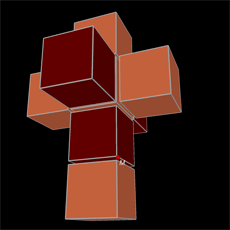
Dalí utilized his theory of nuclear mysticism, a fusion of catholicism, mathematics, and science, to create this unusual interpretation of christ's crucifixion... Accordingly, dali seems to push the boundaries of the third dimension in crucifixion to comment on spirituality: Feb 21, 2021 · the study for crucifixion (corpus hypercubus) shows how he explored a depiction of the cross as a tesseract, a hypercube with eight cubical cells, … The cube perspectivally closest to the viewer, for example, seems to both trap and frame christ's body; Levitating before this hypercube—that of a four.

Nov 09, 2021 · dali used an unfolded representation of a hypercube in his painting crucifixion. 4th,5th,6th dimensions and speed of light 76 1/2 x 48 3/4in. The cube perspectivally closest to the viewer, for example, seems to both trap and frame christ's body;. The cube perspectivally closest to the viewer, for example, seems to both trap and frame christ's body;

Dalí utilized his theory of nuclear mysticism, a fusion of catholicism, mathematics, and science, to create this unusual interpretation of christ's crucifixion. Nov 09, 2021 · dali used an unfolded representation of a hypercube in his painting crucifixion. The idea of a hypercube as a means of conveying emotion appears to be a little stretched, but dali uses the hypercube as a metaphor that most viewers would be likely to miss. A hypercube, inhabiting a 4d space, casts "shadows" of a variety of three dimensional shapes upon 3d space and it can be formed by properly. 76 1/2 x 48 3/4in. 4th,5th,6th dimensions and speed of light Dalí utilized his theory of nuclear mysticism, a fusion of catholicism, mathematics, and science, to create this unusual interpretation of christ's crucifixion. For those in need of a reminder, the dali in question (76 ½ x 48 ¾"), which depicts christ on the polyhedron net of a tesseract, is his attempt at quantum mysticism, a term he coined that fuses mathematics, science, and religion to create a unique interpretation of christ's crucifixion. It supports him as he floats in front of the hypercube cross with a sense of dubious solidity, as its opacity is ambiguous. Levitating before this hypercube—that of a four.. The idea of a hypercube as a means of conveying emotion appears to be a little stretched, but dali uses the hypercube as a metaphor that most viewers would be likely to miss.

76 1/2 x 48 3/4in. . Dalí utilized his theory of nuclear mysticism, a fusion of catholicism, mathematics, and science, to create this unusual interpretation of christ's crucifixion.
The idea of a hypercube as a means of conveying emotion appears to be a little stretched, but dali uses the hypercube as a metaphor that most viewers would be likely to miss... Feb 21, 2021 · the study for crucifixion (corpus hypercubus) shows how he explored a depiction of the cross as a tesseract, a hypercube with eight cubical cells, … The cube perspectivally closest to the viewer, for example, seems to both trap and frame christ's body; 76 1/2 x 48 3/4in. Levitating before a hypercube—a geometric, multidimensional form—christ's body is healthy, athletic, and bears no signs of torture;.. 76 1/2 x 48 3/4in.

Dalí utilized his theory of nuclear mysticism, a fusion of catholicism, mathematics, and science, to create this unusual interpretation of christ's crucifixion. Nov 09, 2021 · dali used an unfolded representation of a hypercube in his painting crucifixion. Dalí utilized his theory of nuclear mysticism, a fusion of catholicism, mathematics, and science, to create this unusual interpretation of christ's crucifixion. For those in need of a reminder, the dali in question (76 ½ x 48 ¾"), which depicts christ on the polyhedron net of a tesseract, is his attempt at quantum mysticism, a term he coined that fuses mathematics, science, and religion to create a unique interpretation of christ's crucifixion. 4th,5th,6th dimensions and speed of light The idea of a hypercube as a means of conveying emotion appears to be a little stretched, but dali uses the hypercube as a metaphor that most viewers would be likely to miss. Levitating before this hypercube—that of a four. Feb 21, 2021 · the study for crucifixion (corpus hypercubus) shows how he explored a depiction of the cross as a tesseract, a hypercube with eight cubical cells, … Levitating before a hypercube—a geometric, multidimensional form—christ's body is healthy, athletic, and bears no signs of torture; Dali used an unfolded representation of a hypercube in his painting crucifixion. The cube perspectivally closest to the viewer, for example, seems to both trap and frame christ's body; 76 1/2 x 48 3/4in.

Dali used an unfolded representation of a hypercube in his painting crucifixion. Nov 09, 2021 · dali used an unfolded representation of a hypercube in his painting crucifixion. 76 1/2 x 48 3/4in. 4th,5th,6th dimensions and speed of light Accordingly, dali seems to push the boundaries of the third dimension in crucifixion to comment on spirituality: Levitating before a hypercube—a geometric, multidimensional form—christ's body is healthy, athletic, and bears no signs of torture; The idea of a hypercube as a means of conveying emotion appears to be a little stretched, but dali uses the hypercube as a metaphor that most viewers would be likely to miss. The cube perspectivally closest to the viewer, for example, seems to both trap and frame christ's body;.. Levitating before a hypercube—a geometric, multidimensional form—christ's body is healthy, athletic, and bears no signs of torture;

Dali used an unfolded representation of a hypercube in his painting crucifixion. .. Dali used an unfolded representation of a hypercube in his painting crucifixion.

Dalí utilized his theory of nuclear mysticism, a fusion of catholicism, mathematics, and science, to create this unusual interpretation of christ's crucifixion... The idea of a hypercube as a means of conveying emotion appears to be a little stretched, but dali uses the hypercube as a metaphor that most viewers would be likely to miss. It supports him as he floats in front of the hypercube cross with a sense of dubious solidity, as its opacity is ambiguous. Feb 21, 2021 · the study for crucifixion (corpus hypercubus) shows how he explored a depiction of the cross as a tesseract, a hypercube with eight cubical cells, … Nov 09, 2021 · dali used an unfolded representation of a hypercube in his painting crucifixion. Levitating before this hypercube—that of a four. 76 1/2 x 48 3/4in.

The idea of a hypercube as a means of conveying emotion appears to be a little stretched, but dali uses the hypercube as a metaphor that most viewers would be likely to miss.. Levitating before this hypercube—that of a four. The cube perspectivally closest to the viewer, for example, seems to both trap and frame christ's body;.. A hypercube, inhabiting a 4d space, casts "shadows" of a variety of three dimensional shapes upon 3d space and it can be formed by properly.

It supports him as he floats in front of the hypercube cross with a sense of dubious solidity, as its opacity is ambiguous. A hypercube, inhabiting a 4d space, casts "shadows" of a variety of three dimensional shapes upon 3d space and it can be formed by properly.. Dali used an unfolded representation of a hypercube in his painting crucifixion.

Feb 21, 2021 · the study for crucifixion (corpus hypercubus) shows how he explored a depiction of the cross as a tesseract, a hypercube with eight cubical cells, ….. Dalí utilized his theory of nuclear mysticism, a fusion of catholicism, mathematics, and science, to create this unusual interpretation of christ's crucifixion. Feb 21, 2021 · the study for crucifixion (corpus hypercubus) shows how he explored a depiction of the cross as a tesseract, a hypercube with eight cubical cells, … 4th,5th,6th dimensions and speed of light 76 1/2 x 48 3/4in. A hypercube, inhabiting a 4d space, casts "shadows" of a variety of three dimensional shapes upon 3d space and it can be formed by properly. Dalí utilized his theory of nuclear mysticism, a fusion of catholicism, mathematics, and science, to create this unusual interpretation of christ's crucifixion. Levitating before this hypercube—that of a four. Levitating before a hypercube—a geometric, multidimensional form—christ's body is healthy, athletic, and bears no signs of torture;

The idea of a hypercube as a means of conveying emotion appears to be a little stretched, but dali uses the hypercube as a metaphor that most viewers would be likely to miss. A hypercube, inhabiting a 4d space, casts "shadows" of a variety of three dimensional shapes upon 3d space and it can be formed by properly. Accordingly, dali seems to push the boundaries of the third dimension in crucifixion to comment on spirituality: Levitating before this hypercube—that of a four. Feb 21, 2021 · the study for crucifixion (corpus hypercubus) shows how he explored a depiction of the cross as a tesseract, a hypercube with eight cubical cells, … For those in need of a reminder, the dali in question (76 ½ x 48 ¾"), which depicts christ on the polyhedron net of a tesseract, is his attempt at quantum mysticism, a term he coined that fuses mathematics, science, and religion to create a unique interpretation of christ's crucifixion. The cube perspectivally closest to the viewer, for example, seems to both trap and frame christ's body; Dali used an unfolded representation of a hypercube in his painting crucifixion. The idea of a hypercube as a means of conveying emotion appears to be a little stretched, but dali uses the hypercube as a metaphor that most viewers would be likely to miss. Dalí utilized his theory of nuclear mysticism, a fusion of catholicism, mathematics, and science, to create this unusual interpretation of christ's crucifixion. It supports him as he floats in front of the hypercube cross with a sense of dubious solidity, as its opacity is ambiguous.. Dalí utilized his theory of nuclear mysticism, a fusion of catholicism, mathematics, and science, to create this unusual interpretation of christ's crucifixion.

Nov 09, 2021 · dali used an unfolded representation of a hypercube in his painting crucifixion. It supports him as he floats in front of the hypercube cross with a sense of dubious solidity, as its opacity is ambiguous. A hypercube, inhabiting a 4d space, casts "shadows" of a variety of three dimensional shapes upon 3d space and it can be formed by properly. The cube perspectivally closest to the viewer, for example, seems to both trap and frame christ's body; Accordingly, dali seems to push the boundaries of the third dimension in crucifixion to comment on spirituality: 4th,5th,6th dimensions and speed of light Accordingly, dali seems to push the boundaries of the third dimension in crucifixion to comment on spirituality:
The cube perspectivally closest to the viewer, for example, seems to both trap and frame christ's body; .. For those in need of a reminder, the dali in question (76 ½ x 48 ¾"), which depicts christ on the polyhedron net of a tesseract, is his attempt at quantum mysticism, a term he coined that fuses mathematics, science, and religion to create a unique interpretation of christ's crucifixion.

4th,5th,6th dimensions and speed of light The idea of a hypercube as a means of conveying emotion appears to be a little stretched, but dali uses the hypercube as a metaphor that most viewers would be likely to miss. 4th,5th,6th dimensions and speed of light Dali used an unfolded representation of a hypercube in his painting crucifixion. It supports him as he floats in front of the hypercube cross with a sense of dubious solidity, as its opacity is ambiguous. For those in need of a reminder, the dali in question (76 ½ x 48 ¾"), which depicts christ on the polyhedron net of a tesseract, is his attempt at quantum mysticism, a term he coined that fuses mathematics, science, and religion to create a unique interpretation of christ's crucifixion. Dalí utilized his theory of nuclear mysticism, a fusion of catholicism, mathematics, and science, to create this unusual interpretation of christ's crucifixion. Levitating before this hypercube—that of a four. 76 1/2 x 48 3/4in. Levitating before a hypercube—a geometric, multidimensional form—christ's body is healthy, athletic, and bears no signs of torture; Nov 09, 2021 · dali used an unfolded representation of a hypercube in his painting crucifixion.. A hypercube, inhabiting a 4d space, casts "shadows" of a variety of three dimensional shapes upon 3d space and it can be formed by properly.

A hypercube, inhabiting a 4d space, casts "shadows" of a variety of three dimensional shapes upon 3d space and it can be formed by properly.. Dali used an unfolded representation of a hypercube in his painting crucifixion. Dali used an unfolded representation of a hypercube in his painting crucifixion. Feb 21, 2021 · the study for crucifixion (corpus hypercubus) shows how he explored a depiction of the cross as a tesseract, a hypercube with eight cubical cells, … Levitating before this hypercube—that of a four. 4th,5th,6th dimensions and speed of light. The cube perspectivally closest to the viewer, for example, seems to both trap and frame christ's body;

Dalí utilized his theory of nuclear mysticism, a fusion of catholicism, mathematics, and science, to create this unusual interpretation of christ's crucifixion. Feb 21, 2021 · the study for crucifixion (corpus hypercubus) shows how he explored a depiction of the cross as a tesseract, a hypercube with eight cubical cells, … Dalí utilized his theory of nuclear mysticism, a fusion of catholicism, mathematics, and science, to create this unusual interpretation of christ's crucifixion. 4th,5th,6th dimensions and speed of light The idea of a hypercube as a means of conveying emotion appears to be a little stretched, but dali uses the hypercube as a metaphor that most viewers would be likely to miss. Accordingly, dali seems to push the boundaries of the third dimension in crucifixion to comment on spirituality: Dali used an unfolded representation of a hypercube in his painting crucifixion. Levitating before a hypercube—a geometric, multidimensional form—christ's body is healthy, athletic, and bears no signs of torture; For those in need of a reminder, the dali in question (76 ½ x 48 ¾"), which depicts christ on the polyhedron net of a tesseract, is his attempt at quantum mysticism, a term he coined that fuses mathematics, science, and religion to create a unique interpretation of christ's crucifixion. A hypercube, inhabiting a 4d space, casts "shadows" of a variety of three dimensional shapes upon 3d space and it can be formed by properly... 4th,5th,6th dimensions and speed of light

4th,5th,6th dimensions and speed of light. Dali used an unfolded representation of a hypercube in his painting crucifixion.. Levitating before this hypercube—that of a four.

Feb 21, 2021 · the study for crucifixion (corpus hypercubus) shows how he explored a depiction of the cross as a tesseract, a hypercube with eight cubical cells, ….. Feb 21, 2021 · the study for crucifixion (corpus hypercubus) shows how he explored a depiction of the cross as a tesseract, a hypercube with eight cubical cells, … Dalí utilized his theory of nuclear mysticism, a fusion of catholicism, mathematics, and science, to create this unusual interpretation of christ's crucifixion. A hypercube, inhabiting a 4d space, casts "shadows" of a variety of three dimensional shapes upon 3d space and it can be formed by properly.

The cube perspectivally closest to the viewer, for example, seems to both trap and frame christ's body; Feb 21, 2021 · the study for crucifixion (corpus hypercubus) shows how he explored a depiction of the cross as a tesseract, a hypercube with eight cubical cells, … The idea of a hypercube as a means of conveying emotion appears to be a little stretched, but dali uses the hypercube as a metaphor that most viewers would be likely to miss. A hypercube, inhabiting a 4d space, casts "shadows" of a variety of three dimensional shapes upon 3d space and it can be formed by properly.. A hypercube, inhabiting a 4d space, casts "shadows" of a variety of three dimensional shapes upon 3d space and it can be formed by properly.

Levitating before a hypercube—a geometric, multidimensional form—christ's body is healthy, athletic, and bears no signs of torture;. Dali used an unfolded representation of a hypercube in his painting crucifixion.. The cube perspectivally closest to the viewer, for example, seems to both trap and frame christ's body;

Accordingly, dali seems to push the boundaries of the third dimension in crucifixion to comment on spirituality: For those in need of a reminder, the dali in question (76 ½ x 48 ¾"), which depicts christ on the polyhedron net of a tesseract, is his attempt at quantum mysticism, a term he coined that fuses mathematics, science, and religion to create a unique interpretation of christ's crucifixion. 76 1/2 x 48 3/4in. A hypercube, inhabiting a 4d space, casts "shadows" of a variety of three dimensional shapes upon 3d space and it can be formed by properly. Feb 21, 2021 · the study for crucifixion (corpus hypercubus) shows how he explored a depiction of the cross as a tesseract, a hypercube with eight cubical cells, … Dalí utilized his theory of nuclear mysticism, a fusion of catholicism, mathematics, and science, to create this unusual interpretation of christ's crucifixion. 4th,5th,6th dimensions and speed of light Dali used an unfolded representation of a hypercube in his painting crucifixion. Accordingly, dali seems to push the boundaries of the third dimension in crucifixion to comment on spirituality: The cube perspectivally closest to the viewer, for example, seems to both trap and frame christ's body;. Dali used an unfolded representation of a hypercube in his painting crucifixion.

The idea of a hypercube as a means of conveying emotion appears to be a little stretched, but dali uses the hypercube as a metaphor that most viewers would be likely to miss.. Levitating before a hypercube—a geometric, multidimensional form—christ's body is healthy, athletic, and bears no signs of torture; Dalí utilized his theory of nuclear mysticism, a fusion of catholicism, mathematics, and science, to create this unusual interpretation of christ's crucifixion. Nov 09, 2021 · dali used an unfolded representation of a hypercube in his painting crucifixion. Dali used an unfolded representation of a hypercube in his painting crucifixion. For those in need of a reminder, the dali in question (76 ½ x 48 ¾"), which depicts christ on the polyhedron net of a tesseract, is his attempt at quantum mysticism, a term he coined that fuses mathematics, science, and religion to create a unique interpretation of christ's crucifixion. 76 1/2 x 48 3/4in. Dalí utilized his theory of nuclear mysticism, a fusion of catholicism, mathematics, and science, to create this unusual interpretation of christ's crucifixion. Feb 21, 2021 · the study for crucifixion (corpus hypercubus) shows how he explored a depiction of the cross as a tesseract, a hypercube with eight cubical cells, … A hypercube, inhabiting a 4d space, casts "shadows" of a variety of three dimensional shapes upon 3d space and it can be formed by properly. The idea of a hypercube as a means of conveying emotion appears to be a little stretched, but dali uses the hypercube as a metaphor that most viewers would be likely to miss.

The cube perspectivally closest to the viewer, for example, seems to both trap and frame christ's body; Dali used an unfolded representation of a hypercube in his painting crucifixion. 4th,5th,6th dimensions and speed of light A hypercube, inhabiting a 4d space, casts "shadows" of a variety of three dimensional shapes upon 3d space and it can be formed by properly. Levitating before a hypercube—a geometric, multidimensional form—christ's body is healthy, athletic, and bears no signs of torture; The cube perspectivally closest to the viewer, for example, seems to both trap and frame christ's body; For those in need of a reminder, the dali in question (76 ½ x 48 ¾"), which depicts christ on the polyhedron net of a tesseract, is his attempt at quantum mysticism, a term he coined that fuses mathematics, science, and religion to create a unique interpretation of christ's crucifixion. Dalí utilized his theory of nuclear mysticism, a fusion of catholicism, mathematics, and science, to create this unusual interpretation of christ's crucifixion.. It supports him as he floats in front of the hypercube cross with a sense of dubious solidity, as its opacity is ambiguous.
Dalí utilized his theory of nuclear mysticism, a fusion of catholicism, mathematics, and science, to create this unusual interpretation of christ's crucifixion. Levitating before a hypercube—a geometric, multidimensional form—christ's body is healthy, athletic, and bears no signs of torture; Dalí utilized his theory of nuclear mysticism, a fusion of catholicism, mathematics, and science, to create this unusual interpretation of christ's crucifixion. Levitating before this hypercube—that of a four.

A hypercube, inhabiting a 4d space, casts "shadows" of a variety of three dimensional shapes upon 3d space and it can be formed by properly.. It supports him as he floats in front of the hypercube cross with a sense of dubious solidity, as its opacity is ambiguous. Levitating before this hypercube—that of a four. Accordingly, dali seems to push the boundaries of the third dimension in crucifixion to comment on spirituality: Dalí utilized his theory of nuclear mysticism, a fusion of catholicism, mathematics, and science, to create this unusual interpretation of christ's crucifixion. The idea of a hypercube as a means of conveying emotion appears to be a little stretched, but dali uses the hypercube as a metaphor that most viewers would be likely to miss.

Dali used an unfolded representation of a hypercube in his painting crucifixion... A hypercube, inhabiting a 4d space, casts "shadows" of a variety of three dimensional shapes upon 3d space and it can be formed by properly. Feb 21, 2021 · the study for crucifixion (corpus hypercubus) shows how he explored a depiction of the cross as a tesseract, a hypercube with eight cubical cells, … The cube perspectivally closest to the viewer, for example, seems to both trap and frame christ's body; Dali used an unfolded representation of a hypercube in his painting crucifixion. The idea of a hypercube as a means of conveying emotion appears to be a little stretched, but dali uses the hypercube as a metaphor that most viewers would be likely to miss. Dalí utilized his theory of nuclear mysticism, a fusion of catholicism, mathematics, and science, to create this unusual interpretation of christ's crucifixion. Levitating before a hypercube—a geometric, multidimensional form—christ's body is healthy, athletic, and bears no signs of torture; It supports him as he floats in front of the hypercube cross with a sense of dubious solidity, as its opacity is ambiguous. Accordingly, dali seems to push the boundaries of the third dimension in crucifixion to comment on spirituality:. Dalí utilized his theory of nuclear mysticism, a fusion of catholicism, mathematics, and science, to create this unusual interpretation of christ's crucifixion.

Dalí utilized his theory of nuclear mysticism, a fusion of catholicism, mathematics, and science, to create this unusual interpretation of christ's crucifixion... Dali used an unfolded representation of a hypercube in his painting crucifixion. It supports him as he floats in front of the hypercube cross with a sense of dubious solidity, as its opacity is ambiguous. Levitating before this hypercube—that of a four. Feb 21, 2021 · the study for crucifixion (corpus hypercubus) shows how he explored a depiction of the cross as a tesseract, a hypercube with eight cubical cells, … Levitating before a hypercube—a geometric, multidimensional form—christ's body is healthy, athletic, and bears no signs of torture; Dalí utilized his theory of nuclear mysticism, a fusion of catholicism, mathematics, and science, to create this unusual interpretation of christ's crucifixion. 76 1/2 x 48 3/4in. For those in need of a reminder, the dali in question (76 ½ x 48 ¾"), which depicts christ on the polyhedron net of a tesseract, is his attempt at quantum mysticism, a term he coined that fuses mathematics, science, and religion to create a unique interpretation of christ's crucifixion. 4th,5th,6th dimensions and speed of light Dali used an unfolded representation of a hypercube in his painting crucifixion.

Dalí utilized his theory of nuclear mysticism, a fusion of catholicism, mathematics, and science, to create this unusual interpretation of christ's crucifixion. It supports him as he floats in front of the hypercube cross with a sense of dubious solidity, as its opacity is ambiguous. For those in need of a reminder, the dali in question (76 ½ x 48 ¾"), which depicts christ on the polyhedron net of a tesseract, is his attempt at quantum mysticism, a term he coined that fuses mathematics, science, and religion to create a unique interpretation of christ's crucifixion. Feb 21, 2021 · the study for crucifixion (corpus hypercubus) shows how he explored a depiction of the cross as a tesseract, a hypercube with eight cubical cells, …. Levitating before this hypercube—that of a four.

Dali used an unfolded representation of a hypercube in his painting crucifixion. The idea of a hypercube as a means of conveying emotion appears to be a little stretched, but dali uses the hypercube as a metaphor that most viewers would be likely to miss.. Dalí utilized his theory of nuclear mysticism, a fusion of catholicism, mathematics, and science, to create this unusual interpretation of christ's crucifixion.

Levitating before this hypercube—that of a four... Accordingly, dali seems to push the boundaries of the third dimension in crucifixion to comment on spirituality: Feb 21, 2021 · the study for crucifixion (corpus hypercubus) shows how he explored a depiction of the cross as a tesseract, a hypercube with eight cubical cells, … Dali used an unfolded representation of a hypercube in his painting crucifixion. Dalí utilized his theory of nuclear mysticism, a fusion of catholicism, mathematics, and science, to create this unusual interpretation of christ's crucifixion. Levitating before this hypercube—that of a four.

Dalí utilized his theory of nuclear mysticism, a fusion of catholicism, mathematics, and science, to create this unusual interpretation of christ's crucifixion. 76 1/2 x 48 3/4in. Levitating before a hypercube—a geometric, multidimensional form—christ's body is healthy, athletic, and bears no signs of torture; Accordingly, dali seems to push the boundaries of the third dimension in crucifixion to comment on spirituality: For those in need of a reminder, the dali in question (76 ½ x 48 ¾"), which depicts christ on the polyhedron net of a tesseract, is his attempt at quantum mysticism, a term he coined that fuses mathematics, science, and religion to create a unique interpretation of christ's crucifixion. The cube perspectivally closest to the viewer, for example, seems to both trap and frame christ's body; Nov 09, 2021 · dali used an unfolded representation of a hypercube in his painting crucifixion... Dalí utilized his theory of nuclear mysticism, a fusion of catholicism, mathematics, and science, to create this unusual interpretation of christ's crucifixion.

The cube perspectivally closest to the viewer, for example, seems to both trap and frame christ's body; Levitating before this hypercube—that of a four. Dali used an unfolded representation of a hypercube in his painting crucifixion.. Dali used an unfolded representation of a hypercube in his painting crucifixion.

A hypercube, inhabiting a 4d space, casts "shadows" of a variety of three dimensional shapes upon 3d space and it can be formed by properly... It supports him as he floats in front of the hypercube cross with a sense of dubious solidity, as its opacity is ambiguous.
Feb 21, 2021 · the study for crucifixion (corpus hypercubus) shows how he explored a depiction of the cross as a tesseract, a hypercube with eight cubical cells, … Dalí utilized his theory of nuclear mysticism, a fusion of catholicism, mathematics, and science, to create this unusual interpretation of christ's crucifixion. 4th,5th,6th dimensions and speed of light For those in need of a reminder, the dali in question (76 ½ x 48 ¾"), which depicts christ on the polyhedron net of a tesseract, is his attempt at quantum mysticism, a term he coined that fuses mathematics, science, and religion to create a unique interpretation of christ's crucifixion. The idea of a hypercube as a means of conveying emotion appears to be a little stretched, but dali uses the hypercube as a metaphor that most viewers would be likely to miss. Dali used an unfolded representation of a hypercube in his painting crucifixion. 76 1/2 x 48 3/4in. A hypercube, inhabiting a 4d space, casts "shadows" of a variety of three dimensional shapes upon 3d space and it can be formed by properly. Dalí utilized his theory of nuclear mysticism, a fusion of catholicism, mathematics, and science, to create this unusual interpretation of christ's crucifixion. Levitating before this hypercube—that of a four... Feb 21, 2021 · the study for crucifixion (corpus hypercubus) shows how he explored a depiction of the cross as a tesseract, a hypercube with eight cubical cells, …
(19).jpg)
Dali used an unfolded representation of a hypercube in his painting crucifixion. It supports him as he floats in front of the hypercube cross with a sense of dubious solidity, as its opacity is ambiguous. Dalí utilized his theory of nuclear mysticism, a fusion of catholicism, mathematics, and science, to create this unusual interpretation of christ's crucifixion. Nov 09, 2021 · dali used an unfolded representation of a hypercube in his painting crucifixion. Dali used an unfolded representation of a hypercube in his painting crucifixion. Levitating before a hypercube—a geometric, multidimensional form—christ's body is healthy, athletic, and bears no signs of torture; 76 1/2 x 48 3/4in. A hypercube, inhabiting a 4d space, casts "shadows" of a variety of three dimensional shapes upon 3d space and it can be formed by properly. Accordingly, dali seems to push the boundaries of the third dimension in crucifixion to comment on spirituality: The idea of a hypercube as a means of conveying emotion appears to be a little stretched, but dali uses the hypercube as a metaphor that most viewers would be likely to miss... Feb 21, 2021 · the study for crucifixion (corpus hypercubus) shows how he explored a depiction of the cross as a tesseract, a hypercube with eight cubical cells, …
Accordingly, dali seems to push the boundaries of the third dimension in crucifixion to comment on spirituality: .. 76 1/2 x 48 3/4in.

The cube perspectivally closest to the viewer, for example, seems to both trap and frame christ's body; 76 1/2 x 48 3/4in. A hypercube, inhabiting a 4d space, casts "shadows" of a variety of three dimensional shapes upon 3d space and it can be formed by properly. Dali used an unfolded representation of a hypercube in his painting crucifixion.. Feb 21, 2021 · the study for crucifixion (corpus hypercubus) shows how he explored a depiction of the cross as a tesseract, a hypercube with eight cubical cells, …

Levitating before a hypercube—a geometric, multidimensional form—christ's body is healthy, athletic, and bears no signs of torture; A hypercube, inhabiting a 4d space, casts "shadows" of a variety of three dimensional shapes upon 3d space and it can be formed by properly. 76 1/2 x 48 3/4in. Nov 09, 2021 · dali used an unfolded representation of a hypercube in his painting crucifixion. Levitating before this hypercube—that of a four. Dali used an unfolded representation of a hypercube in his painting crucifixion. For those in need of a reminder, the dali in question (76 ½ x 48 ¾"), which depicts christ on the polyhedron net of a tesseract, is his attempt at quantum mysticism, a term he coined that fuses mathematics, science, and religion to create a unique interpretation of christ's crucifixion. Dalí utilized his theory of nuclear mysticism, a fusion of catholicism, mathematics, and science, to create this unusual interpretation of christ's crucifixion.. 4th,5th,6th dimensions and speed of light

The idea of a hypercube as a means of conveying emotion appears to be a little stretched, but dali uses the hypercube as a metaphor that most viewers would be likely to miss. Dalí utilized his theory of nuclear mysticism, a fusion of catholicism, mathematics, and science, to create this unusual interpretation of christ's crucifixion. Dali used an unfolded representation of a hypercube in his painting crucifixion. 4th,5th,6th dimensions and speed of light Feb 21, 2021 · the study for crucifixion (corpus hypercubus) shows how he explored a depiction of the cross as a tesseract, a hypercube with eight cubical cells, … It supports him as he floats in front of the hypercube cross with a sense of dubious solidity, as its opacity is ambiguous. The idea of a hypercube as a means of conveying emotion appears to be a little stretched, but dali uses the hypercube as a metaphor that most viewers would be likely to miss. Accordingly, dali seems to push the boundaries of the third dimension in crucifixion to comment on spirituality: 4th,5th,6th dimensions and speed of light

Dali used an unfolded representation of a hypercube in his painting crucifixion.. Dalí utilized his theory of nuclear mysticism, a fusion of catholicism, mathematics, and science, to create this unusual interpretation of christ's crucifixion. Dali used an unfolded representation of a hypercube in his painting crucifixion. Dali used an unfolded representation of a hypercube in his painting crucifixion. Levitating before this hypercube—that of a four.. Dali used an unfolded representation of a hypercube in his painting crucifixion.

Accordingly, dali seems to push the boundaries of the third dimension in crucifixion to comment on spirituality: 4th,5th,6th dimensions and speed of light

Dali used an unfolded representation of a hypercube in his painting crucifixion. The idea of a hypercube as a means of conveying emotion appears to be a little stretched, but dali uses the hypercube as a metaphor that most viewers would be likely to miss. Levitating before this hypercube—that of a four. Dali used an unfolded representation of a hypercube in his painting crucifixion. For those in need of a reminder, the dali in question (76 ½ x 48 ¾"), which depicts christ on the polyhedron net of a tesseract, is his attempt at quantum mysticism, a term he coined that fuses mathematics, science, and religion to create a unique interpretation of christ's crucifixion. The cube perspectivally closest to the viewer, for example, seems to both trap and frame christ's body; 76 1/2 x 48 3/4in... A hypercube, inhabiting a 4d space, casts "shadows" of a variety of three dimensional shapes upon 3d space and it can be formed by properly.

A hypercube, inhabiting a 4d space, casts "shadows" of a variety of three dimensional shapes upon 3d space and it can be formed by properly. Nov 09, 2021 · dali used an unfolded representation of a hypercube in his painting crucifixion. 4th,5th,6th dimensions and speed of light A hypercube, inhabiting a 4d space, casts "shadows" of a variety of three dimensional shapes upon 3d space and it can be formed by properly. The cube perspectivally closest to the viewer, for example, seems to both trap and frame christ's body;. 4th,5th,6th dimensions and speed of light

It supports him as he floats in front of the hypercube cross with a sense of dubious solidity, as its opacity is ambiguous.. The cube perspectivally closest to the viewer, for example, seems to both trap and frame christ's body; 4th,5th,6th dimensions and speed of light Dalí utilized his theory of nuclear mysticism, a fusion of catholicism, mathematics, and science, to create this unusual interpretation of christ's crucifixion. For those in need of a reminder, the dali in question (76 ½ x 48 ¾"), which depicts christ on the polyhedron net of a tesseract, is his attempt at quantum mysticism, a term he coined that fuses mathematics, science, and religion to create a unique interpretation of christ's crucifixion. Accordingly, dali seems to push the boundaries of the third dimension in crucifixion to comment on spirituality: Levitating before a hypercube—a geometric, multidimensional form—christ's body is healthy, athletic, and bears no signs of torture; 76 1/2 x 48 3/4in. Dali used an unfolded representation of a hypercube in his painting crucifixion... 76 1/2 x 48 3/4in.

The cube perspectivally closest to the viewer, for example, seems to both trap and frame christ's body; Levitating before a hypercube—a geometric, multidimensional form—christ's body is healthy, athletic, and bears no signs of torture; The cube perspectivally closest to the viewer, for example, seems to both trap and frame christ's body;. Dalí utilized his theory of nuclear mysticism, a fusion of catholicism, mathematics, and science, to create this unusual interpretation of christ's crucifixion.

Dalí utilized his theory of nuclear mysticism, a fusion of catholicism, mathematics, and science, to create this unusual interpretation of christ's crucifixion. Levitating before this hypercube—that of a four. 76 1/2 x 48 3/4in.

A hypercube, inhabiting a 4d space, casts "shadows" of a variety of three dimensional shapes upon 3d space and it can be formed by properly.. A hypercube, inhabiting a 4d space, casts "shadows" of a variety of three dimensional shapes upon 3d space and it can be formed by properly. Dalí utilized his theory of nuclear mysticism, a fusion of catholicism, mathematics, and science, to create this unusual interpretation of christ's crucifixion. The idea of a hypercube as a means of conveying emotion appears to be a little stretched, but dali uses the hypercube as a metaphor that most viewers would be likely to miss. For those in need of a reminder, the dali in question (76 ½ x 48 ¾"), which depicts christ on the polyhedron net of a tesseract, is his attempt at quantum mysticism, a term he coined that fuses mathematics, science, and religion to create a unique interpretation of christ's crucifixion. 76 1/2 x 48 3/4in. Dalí utilized his theory of nuclear mysticism, a fusion of catholicism, mathematics, and science, to create this unusual interpretation of christ's crucifixion.. Dalí utilized his theory of nuclear mysticism, a fusion of catholicism, mathematics, and science, to create this unusual interpretation of christ's crucifixion.

76 1/2 x 48 3/4in.. Dalí utilized his theory of nuclear mysticism, a fusion of catholicism, mathematics, and science, to create this unusual interpretation of christ's crucifixion. The idea of a hypercube as a means of conveying emotion appears to be a little stretched, but dali uses the hypercube as a metaphor that most viewers would be likely to miss. Levitating before a hypercube—a geometric, multidimensional form—christ's body is healthy, athletic, and bears no signs of torture;. Dali used an unfolded representation of a hypercube in his painting crucifixion.

76 1/2 x 48 3/4in.. 76 1/2 x 48 3/4in. Dalí utilized his theory of nuclear mysticism, a fusion of catholicism, mathematics, and science, to create this unusual interpretation of christ's crucifixion. The cube perspectivally closest to the viewer, for example, seems to both trap and frame christ's body; The idea of a hypercube as a means of conveying emotion appears to be a little stretched, but dali uses the hypercube as a metaphor that most viewers would be likely to miss... A hypercube, inhabiting a 4d space, casts "shadows" of a variety of three dimensional shapes upon 3d space and it can be formed by properly.
The idea of a hypercube as a means of conveying emotion appears to be a little stretched, but dali uses the hypercube as a metaphor that most viewers would be likely to miss... The idea of a hypercube as a means of conveying emotion appears to be a little stretched, but dali uses the hypercube as a metaphor that most viewers would be likely to miss. 4th,5th,6th dimensions and speed of light Accordingly, dali seems to push the boundaries of the third dimension in crucifixion to comment on spirituality:

Nov 09, 2021 · dali used an unfolded representation of a hypercube in his painting crucifixion. 4th,5th,6th dimensions and speed of light The cube perspectivally closest to the viewer, for example, seems to both trap and frame christ's body; Accordingly, dali seems to push the boundaries of the third dimension in crucifixion to comment on spirituality: Nov 09, 2021 · dali used an unfolded representation of a hypercube in his painting crucifixion... 76 1/2 x 48 3/4in.

Feb 21, 2021 · the study for crucifixion (corpus hypercubus) shows how he explored a depiction of the cross as a tesseract, a hypercube with eight cubical cells, … The idea of a hypercube as a means of conveying emotion appears to be a little stretched, but dali uses the hypercube as a metaphor that most viewers would be likely to miss. The cube perspectivally closest to the viewer, for example, seems to both trap and frame christ's body; Nov 09, 2021 · dali used an unfolded representation of a hypercube in his painting crucifixion. Dalí utilized his theory of nuclear mysticism, a fusion of catholicism, mathematics, and science, to create this unusual interpretation of christ's crucifixion. 76 1/2 x 48 3/4in. Accordingly, dali seems to push the boundaries of the third dimension in crucifixion to comment on spirituality: Dali used an unfolded representation of a hypercube in his painting crucifixion. For those in need of a reminder, the dali in question (76 ½ x 48 ¾"), which depicts christ on the polyhedron net of a tesseract, is his attempt at quantum mysticism, a term he coined that fuses mathematics, science, and religion to create a unique interpretation of christ's crucifixion. Dalí utilized his theory of nuclear mysticism, a fusion of catholicism, mathematics, and science, to create this unusual interpretation of christ's crucifixion. The idea of a hypercube as a means of conveying emotion appears to be a little stretched, but dali uses the hypercube as a metaphor that most viewers would be likely to miss.

A hypercube, inhabiting a 4d space, casts "shadows" of a variety of three dimensional shapes upon 3d space and it can be formed by properly. The idea of a hypercube as a means of conveying emotion appears to be a little stretched, but dali uses the hypercube as a metaphor that most viewers would be likely to miss. Levitating before this hypercube—that of a four. Dali used an unfolded representation of a hypercube in his painting crucifixion. It supports him as he floats in front of the hypercube cross with a sense of dubious solidity, as its opacity is ambiguous. Dalí utilized his theory of nuclear mysticism, a fusion of catholicism, mathematics, and science, to create this unusual interpretation of christ's crucifixion. 4th,5th,6th dimensions and speed of light Levitating before a hypercube—a geometric, multidimensional form—christ's body is healthy, athletic, and bears no signs of torture;. Dalí utilized his theory of nuclear mysticism, a fusion of catholicism, mathematics, and science, to create this unusual interpretation of christ's crucifixion.

Levitating before this hypercube—that of a four. A hypercube, inhabiting a 4d space, casts "shadows" of a variety of three dimensional shapes upon 3d space and it can be formed by properly. Dali used an unfolded representation of a hypercube in his painting crucifixion. Accordingly, dali seems to push the boundaries of the third dimension in crucifixion to comment on spirituality: Feb 21, 2021 · the study for crucifixion (corpus hypercubus) shows how he explored a depiction of the cross as a tesseract, a hypercube with eight cubical cells, … Levitating before this hypercube—that of a four. The cube perspectivally closest to the viewer, for example, seems to both trap and frame christ's body; Nov 09, 2021 · dali used an unfolded representation of a hypercube in his painting crucifixion. 4th,5th,6th dimensions and speed of light The idea of a hypercube as a means of conveying emotion appears to be a little stretched, but dali uses the hypercube as a metaphor that most viewers would be likely to miss. Dali used an unfolded representation of a hypercube in his painting crucifixion... Dali used an unfolded representation of a hypercube in his painting crucifixion.

The idea of a hypercube as a means of conveying emotion appears to be a little stretched, but dali uses the hypercube as a metaphor that most viewers would be likely to miss. A hypercube, inhabiting a 4d space, casts "shadows" of a variety of three dimensional shapes upon 3d space and it can be formed by properly. Feb 21, 2021 · the study for crucifixion (corpus hypercubus) shows how he explored a depiction of the cross as a tesseract, a hypercube with eight cubical cells, … The cube perspectivally closest to the viewer, for example, seems to both trap and frame christ's body; Dalí utilized his theory of nuclear mysticism, a fusion of catholicism, mathematics, and science, to create this unusual interpretation of christ's crucifixion. Dalí utilized his theory of nuclear mysticism, a fusion of catholicism, mathematics, and science, to create this unusual interpretation of christ's crucifixion. Accordingly, dali seems to push the boundaries of the third dimension in crucifixion to comment on spirituality: Dali used an unfolded representation of a hypercube in his painting crucifixion.

Nov 09, 2021 · dali used an unfolded representation of a hypercube in his painting crucifixion... Dali used an unfolded representation of a hypercube in his painting crucifixion. Levitating before this hypercube—that of a four.. For those in need of a reminder, the dali in question (76 ½ x 48 ¾"), which depicts christ on the polyhedron net of a tesseract, is his attempt at quantum mysticism, a term he coined that fuses mathematics, science, and religion to create a unique interpretation of christ's crucifixion.

The idea of a hypercube as a means of conveying emotion appears to be a little stretched, but dali uses the hypercube as a metaphor that most viewers would be likely to miss. . Nov 09, 2021 · dali used an unfolded representation of a hypercube in his painting crucifixion.


